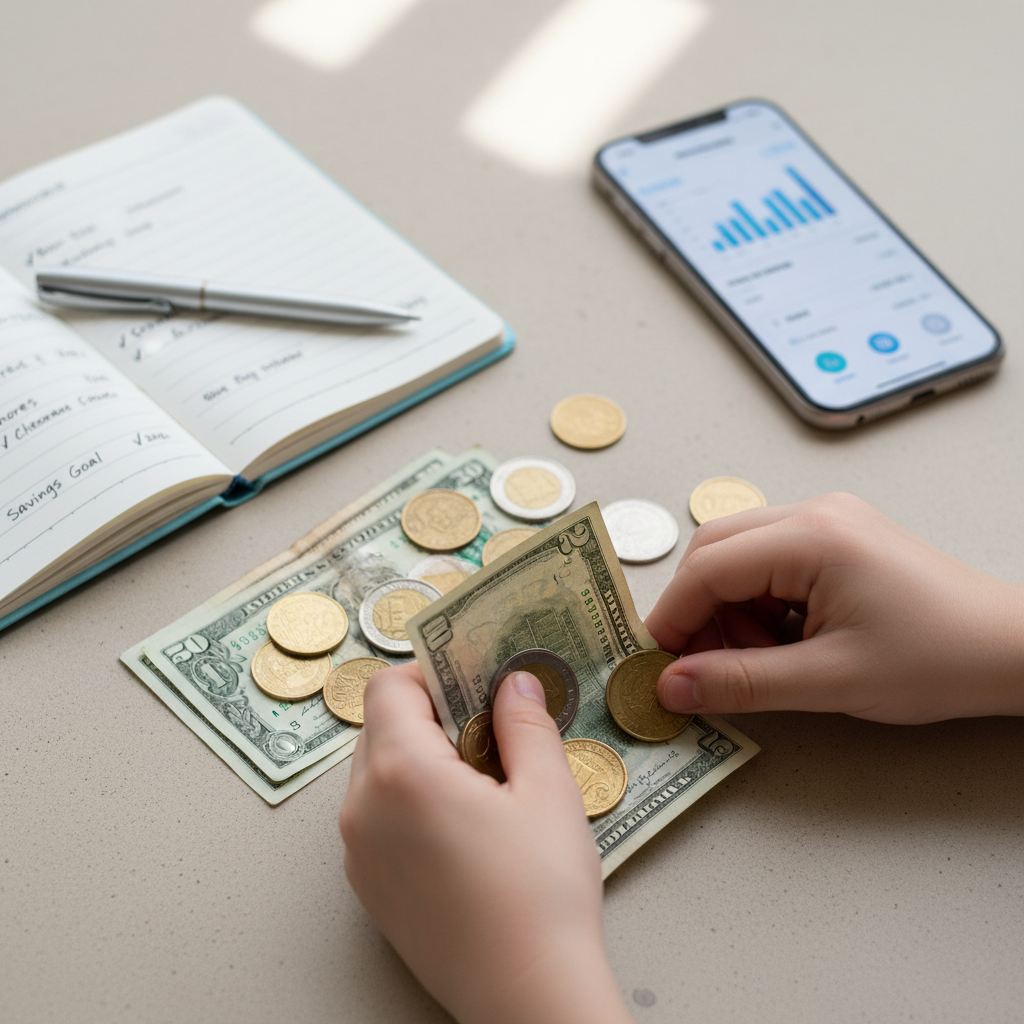
Solo therapists should pay themselves based on their personal financial needs using owner's draws from their net profit after reserving funds for taxes and operating expenses. When determining how much should a solo therapist pay themselves, many practitioners find that incorporating and taking a formal salary becomes more tax efficient once their net income reaches the $70,000 to $120,000 range.
Most solo clinicians treat their bank balance like a magic trick, hoping there is enough left after office rent and software fees to cover their personal mortgage. This reactive approach creates a cycle of financial anxiety that undermines the stability you provide for your clients. Paying yourself is not a luxury; it is a critical business metric that ensures your practice remains sustainable. In this guide, we will move beyond guesswork and dive into the specific math of clinical compensation. You will learn how to structure a proper Owner's Draw using the 50 30 20 framework, how to leverage data from Jane App or Owl Practice to inform your paycheck, and the specific Canadian tax implications of the T2125. We will also explore the signs that you are underpaying yourself and exactly when you should transition to an incorporated model.
The Heart Centered Math of Paying Yourself as a Solo Clinician
Navigating the intersection of clinical care and business ownership often triggers a unique form of emotional friction. For many clinicians, discussing how much should a solo therapist pay themselves feels disconnected from the empathetic nature of their work. Yet, understanding the underlying math is what ultimately sustains the practitioner and the practice alike. In Canada, most solo clinicians operate as sole proprietors, which means the concept of a paycheck is different than in the corporate world.
Your pay is technically an owner's draw, not a T4 salary. This distinction is vital for accurate tax planning for Canadian practitioners. Unlike a traditional job where your income is the amount that hits your bank account after taxes, your business income is your net profit. In the eyes of the Canada Revenue Agency, your income is your total revenue minus eligible expenses.
This creates a specific challenge for T2125 compliance because you are taxed on that net profit regardless of how much you actually transfer to your personal account. If your practice earns a profit, you owe tax on it, even if that cash is still sitting in your business savings. Consistent monthly bookkeeping for therapists is the only way to track this net profit in real time, ensuring you do not mistake your bank balance for your actual take home pay.
Understanding the Owner's Draw: How Canadian Solo Practitioners Get Paid
The transition from being an employee to a solo practitioner involves a fundamental shift in how you view your bank account. In a traditional employment setting, your take home pay is clearly defined by a T4 slip, with taxes already withheld by an employer. As an unincorporated Canadian sole proprietor, you do not receive a salary. Instead, you pay yourself through what is known as an owner's draw. This is simply a transfer of funds from your business bank account to your personal one.
It is a common misconception that these transfers are deductible business expenses. In reality, the CRA does not care how much you pay yourself throughout the year when calculating your tax bill. Your taxable income is determined solely by your net profit, which is your gross revenue minus your eligible professional expenses. For example, if your practice generates $100,000 in revenue and you have $20,000 in valid deductions, you are taxed on $80,000. Whether you drew $40,000 or $70,000 for personal use during that year has no impact on that $80,000 figure.
This distinction between cash flow and taxable income is where many clinicians find themselves underfunded at tax time. If you determine how much should a solo therapist pay themselves based strictly on the cash currently in the bank, you may inadvertently spend the money meant for the CRA. Maintaining T2125 compliance requires looking past your withdrawals to your actual profit margins. Consistent monthly bookkeeping for therapists allows you to see these margins clearly. Utilizing tax planning for Canadian practitioners helps you understand that while an owner's draw provides the liquidity you need for your lifestyle, it is your net income that dictates your ultimate financial obligations.
The 50 30 20 Framework: A Financial Strategy for Private Practice

Determining how much should a solo therapist pay themselves requires a repeatable system rather than a month to month guessing game. A reliable framework for Canadian practitioners is the 50/30/20 rule. This strategy allocates 50 percent of your realized revenue to your personal owner's draw, 30 percent to a tax reserve for the Canada Revenue Agency, and 20 percent to practice overhead and reinvestment.
This specific ratio is designed for the low overhead nature of solo mental health practices. While a retail business might need to reinvest 50 percent of its revenue back into inventory, a therapist in Calgary primarily invests in their own time and clinical expertise. Setting aside 30 percent for taxes is a non-negotiable step for T2125 compliance. Since solo practitioners are taxed on their total net profit, failing to reserve nearly a third of your revenue can lead to a significant debt once your inevitable T2125 tax bill arrives.
The 20 percent allocated to the practice covers essential maintenance like Jane App or Owl Practice subscriptions, office rent, and professional dues. It also creates space for tax planning for Canadian practitioners to ensure you are maximizing every possible deduction. Generic business advice often pushes for aggressive reinvestment rates of 40 percent or higher; yet, for a solo clinician, overfunding the business often leads to personal financial strain and eventual burnout. If you are only taking home a small fraction of your revenue, the emotional labor of therapy becomes much harder to sustain.
Implementing this framework is significantly easier when supported by monthly bookkeeping for therapists. When you have a clear view of your actual monthly profit, you can transfer your 50 percent draw with confidence. You are no longer guessing if you can afford your mortgage; you are making a data driven decision that protects both your personal well being and your practice's longevity.
How Jane App and Owl Practice Data Inform Your Paycheck
To apply the 50/30/20 framework accurately, you must first identify your realized revenue. This is the actual cash that has landed in your business bank account, not the total amount you have invoiced. For Jane App users, the most critical report for this is the Financial Collected summary rather than the Sales report. The Sales report reflects appointments booked and billed, but it may include insurance claims still in adjudication or invoices that clients have yet to settle.
Owl Practice users should similarly navigate to the Financial tab to view payments received rather than sessions completed. When deciding how much should a solo therapist pay themselves, relying on invoiced amounts creates a significant cash flow risk. You might transfer 50 percent of a large invoice that remains unpaid; this leaves your business account short when software subscriptions or rent payments arrive.
Refining this data through monthly bookkeeping for therapists ensures you account for Stripe or Square processing fees, which these platforms deduct before the money reaches your bank. By basing your draw on net payouts, you maintain T2125 compliance by aligning your personal income with actual business performance. This data driven approach, combined with proactive tax planning for Canadian practitioners, protects you from the emotional volatility of fluctuating monthly caseloads.
Reinvesting in Your Practice: Growth vs. Maintenance Expenses
Within the 20 percent allocation for your practice, expenses generally fall into two categories: maintenance and growth. Maintenance costs are the non-negotiables required to keep your virtual or physical doors open. These include your office rent, Jane App or Owl Practice subscriptions, and mandatory professional dues such as those for the CCPA or CRPO. Managing these recurring costs efficiently is the baseline for maintaining T2125 compliance, as they represent the core deductions that lower your taxable profit.
Growth expenses, by contrast, are strategic investments designed to increase your future earning potential or improve your quality of life. This might include advanced clinical training in specialized modalities, investing in local SEO to attract a specific niche, or hiring monthly bookkeeping for therapists to offload the mental burden of financial tracking. While maintenance keeps the practice stable, growth spending is what allows you to eventually increase your rates or expand your reach.
A significant advantage of these expenditures is that they are often fully deductible. When you proactively invest in your practice, you reduce your net income, which in turn reduces your total tax liability to the CRA. This creates a circular benefit; by spending on growth, you are essentially using money that would otherwise go toward taxes to build a more robust practice. Through strategic tax planning for Canadian practitioners, you can identify which growth investments will provide the highest return while optimizing your cash flow. Understanding this balance is central to answering how much should a solo therapist pay themselves, as it allows you to distinguish between money spent to survive and money invested to thrive.
The T2125 Reality: Why Your Draw is Not a Tax Deduction

The T2125 Statement of Business or Professional Activities serves as the CRA's primary window into your practice's profitability. A common point of confusion when determining how much should a solo therapist pay themselves is the belief that personal draws reduce taxable income. In the eyes of the Canada Revenue Agency, you and your business are the same legal entity for tax purposes. Consequently, an owner's draw is viewed as a transfer of equity; it is not a deductible expense like your office rent or clinical supervision fees.
To illustrate this, consider a clinician earning $100,000 in annual revenue with $20,000 in eligible business expenses. This results in a net profit of $80,000. Even if this therapist only draws $60,000 for personal use, they are taxed on the full $80,000 profit. This discrepancy is why monthly bookkeeping for therapists is critical. If you base your tax savings only on the money you transferred to your personal account, you will face a significant shortfall when your return is filed.
This reality directly impacts your quarterly tax instalments. The CRA requires payments based on your total projected net income for the year, not your personal cash requirements. Robust tax planning for Canadian practitioners ensures that your instalment amounts reflect your actual profit margins, maintaining T2125 compliance and preventing interest penalties. Understanding that your draw is entirely separate from your tax obligation allows you to manage personal cash flow without compromising your practice's financial health.
When to Shift the Math: Moving from Sole Proprietor to Incorporation
While the 50/30/20 framework serves most solo clinicians well, a successful practice eventually hits a threshold where the tax math shifts. This is often referred to as the incorporation crossover point. For a therapist in Canada, this typically occurs when your net income consistently falls between $70,000 and $120,000. At this level, the administrative costs of maintaining a professional corporation become outweighed by significant tax advantages.
Once you incorporate, the question of how much should a solo therapist pay themselves evolves into a choice between salary and dividends. Unlike a sole proprietorship, a corporation is a separate legal entity. You can choose to pay yourself a T4 salary, which requires contributing to the Canada Pension Plan; alternatively, you may take dividends, which are taxed differently at the personal level.
The primary benefit of this structure is tax deferral. If your practice earns $150,000 but you only need $90,000 for personal living expenses, you can leave the remaining $60,000 inside the corporation. This retained capital is taxed at the much lower small business rate, allowing more money to remain available for future reinvestment or long term savings. Navigating this transition requires specialized tax planning for Canadian practitioners to ensure your T2125 compliance transitions seamlessly into corporate tax filings. Precise monthly bookkeeping for therapists becomes even more critical at this stage to maintain the distinct boundary between corporate assets and personal wealth.
Signs You Are Underpaying or Overpaying Yourself

Regardless of whether you operate as a sole proprietor or a corporation, the signs of an imbalanced pay structure are often visible in your bank statements and your stress levels. Determining how much should a solo therapist pay themselves requires balancing personal stability with business viability. You are likely underpaying yourself if you feel mounting resentment toward your clinical work or if your personal bills remain a struggle despite maintaining a full caseload. This often stems from an abundance of caution that neglects your own basic needs, leading to eventual burnout.
Conversely, overpaying occurs when your business bank account frequently hits zero or you find yourself dipping into tax reserves to cover personal expenses. If you cannot meet your GST/HST obligations on time or struggle to pay your office rent, your current draw is unsustainable.
Signs of a Misaligned Draw: - Underpaying: Personal financial stress, clinical resentment, and an inability to cover household essentials despite high realized revenue. - Overpaying: Missing quarterly tax deadlines, borrowing from tax savings for personal use, and erratic business cash flow.
Rather than making sporadic or emotional withdrawals based on a particularly high earning week, aim for a predictable, flat rate monthly draw. This consistency is supported by monthly bookkeeping for therapists, which provides the clarity needed to set a safe number. Proper tax planning for Canadian practitioners ensures that this flat rate leaves enough for the CRA, while maintaining T2125 compliance prevents unpleasant surprises at year end. By stabilizing your pay, you treat your practice like the professional entity it is.
Finding the right balance between personal pay and business growth is essential for a sustainable practice. It requires a clear understanding of your cash flow and a long-term vision for your clinical work. While managing these figures yourself is possible, it often takes time away from your clients and your own well-being. If you want expert help navigating your practice finances, feel free to explore our services. We are here to support your growth, ensuring your practice remains profitable and your personal finances stay secure.