Common CRA audit triggers self-employed therapist Canada practitioners face include reporting significant fluctuations in annual income, claiming disproportionately high business expenses, or failing to maintain organized receipts for home office deductions. Practitioners can reduce their risk by keeping digital copies of all financial records, reporting every source of professional income accurately, and ensuring all claimed expenses are directly related to their clinical practice.
Receiving a notification of a CRA audit is often the primary source of anxiety for self-employed therapists across Canada. You have dedicated your career to the mental well-being of others, yet the complexities of tax compliance can feel like a distinct, overwhelming burden. The reality is that the CRA identifies specific anomalies in private practice accounting that can lead to costly reassessments. This guide provides an expert look into the exact triggers that put solo practitioners at risk. We will explore the common reporting discrepancies found in platforms like Jane App and Owl Practice, the nuances of GST and HST exemptions, and how to properly document expenses on Form T2125. By understanding industry benchmarks for Alberta and adopting professional bookkeeping standards, you can protect your practice and focus on your clinical work with absolute confidence.
Understanding the CRA Audit Process for Canadian Private Practices
Receiving a notice from the Canada Revenue Agency can trigger significant anxiety for mental health professionals who value integrity and precision in their clinical work. In the context of a Canadian private practice, a CRA audit is a formal examination of your financial records to ensure compliance with tax laws. It is important to view this process not as an accusation of wrongdoing, but as a routine verification of the information provided on your tax return.
The CRA utilizes automated systems to identify potential CRA audit triggers self-employed therapist Canada practitioners might inadvertently set off. Solo practitioners are often categorized as higher risk because the T2125 Statement of Business or Professional Activities involves complex calculations for home office use, professional development, and clinical supervision fees. When these figures deviate from established norms, the system flags the return for a manual review.
Maintaining rigorous monthly bookkeeping for therapists is the most effective way to prepare for this scrutiny. By ensuring your records are audit-ready, you transform the audit process from a source of dread into a standard business verification. A thorough T2125 compliance guide helps practitioners understand that accuracy in reporting is their strongest defense against prolonged inquiries.
Top CRA Audit Triggers for Solo Therapists in Canada
Understanding the specific markers the Canada Revenue Agency (CRA) identifies can help you maintain a clean financial profile. While many factors contribute to a review, several specific CRA audit triggers self-employed therapist Canada practitioners should monitor closely are tied directly to how clinical practices operate and report income.
Platform Reporting Discrepancies: The CRA often cross-references reported income against digital trails. If your Jane App or Owl Practice financial summaries show $110,000 in billings but your tax return only reflects $95,000, the automated system flags the $15,000 gap. These discrepancies often occur when practitioners fail to reconcile invoiced versus collected amounts properly, leaving a trail of uncollected revenue that looks like unreported income to an auditor.
Outsized Expense Ratios: While the CRA expects you to invest in your craft, claiming $12,000 in professional development or specialized training on a $60,000 gross income can appear disproportionate to industry averages. Similarly, home office claims that exceed 20 to 25 percent of total household utilities and mortgage interest without a dedicated, square-footage-justified clinical space often prompt further inquiry.
Persistent Business Losses: Reporting a net loss on your T2125 for three or more consecutive years is a significant red flag. The CRA views a business as an entity with a reasonable expectation of profit. Consistent losses may lead them to reclassify your practice as a hobby, which allows them to deny all previously claimed deductions.
Significant Income Fluctuations: A sudden 50 percent increase or decrease in year-over-year revenue suggests either unreported income in previous years or aggressive expense claiming in the current year. Maintaining consistent monthly bookkeeping for therapists helps document the context of these shifts, such as a maternity leave or a temporary reduction in clinical hours.
GST/HST Compliance Errors: Misunderstanding the $30,000 threshold for taxable versus exempt services is a common pitfall. If you provide taxable services like clinical supervision or workshops but fail to register once you hit that limit, a secondary review is likely. Referencing a specialized T2125 compliance guide can help ensure your exemptions are applied correctly to avoid these technical triggers.
The Jane App and Owl Practice Discrepancy Trap
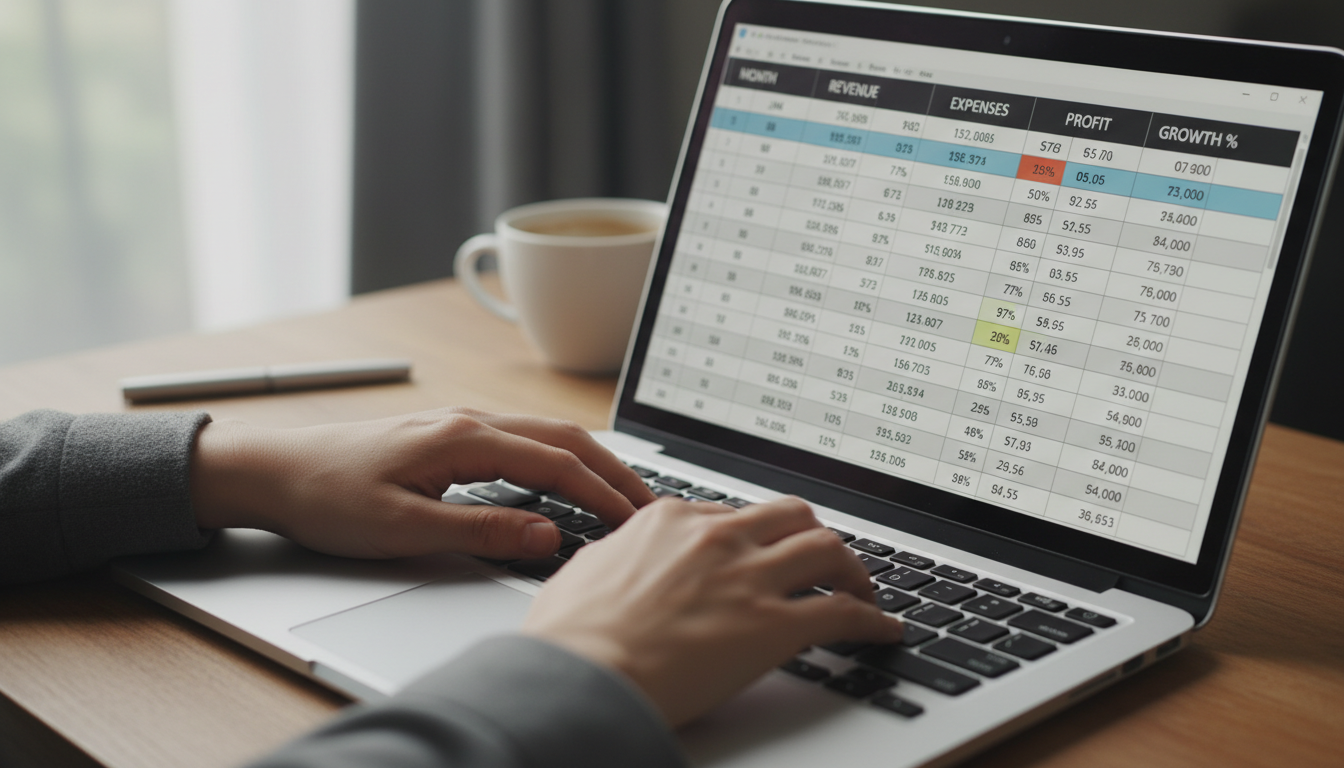
Many Canadian therapists rely on Jane App or Owl Practice to manage their clinical workflow, yet these platforms often create a digital trap during tax season. The primary issue arises from a misunderstanding of cash versus accrual reporting. Therapists frequently make the mistake of reporting income based on 'invoiced' amounts rather than 'collected' amounts. If you generate $12,000 in invoices in December but only receive $9,000 in actual payments by year end, reporting the higher figure means you are paying tax on money you have not yet received. Conversely, failing to account for insurance payouts that arrive after the session date can lead to under-reporting.
The CRA looks for strict consistency between your practice management software reports and your bank deposits. During a review, an auditor will likely request your 'Transaction' or 'Billing' reports from Jane or Owl and cross-reference them with your business bank statements. If the numbers do not align, it becomes one of the major CRA audit triggers self-employed therapist Canada practitioners encounter.
To protect your practice, you must perform a monthly reconciliation. This involves matching every Stripe deposit and e-transfer to its corresponding invoice. Ensuring your digital trail is clean allows you to follow a T2125 compliance guide with confidence. Professional monthly bookkeeping for therapists bridges the gap between your clinical software and your financial statements, ensuring that the income reported to the CRA is the exact income you actually earned.
Navigating GST and HST Exemptions without Flagging the CRA
Navigating the distinction between exempt and taxable revenue is where many practitioners inadvertently create CRA audit triggers self-employed therapist Canada reviewers look for. While many clinical psychotherapy services are exempt from GST/HST, other revenue streams are not. At Bookkeeper For Therapists, we specialize in identifying these nuances to ensure your filings remain accurate.
A common trap is the $30,000 small supplier threshold. While clinical sessions might be exempt, services like clinical supervision, workshops, or consulting are generally taxable. You must monitor these specific totals closely; once your taxable revenue exceeds $30,000 in four consecutive quarters, registration is mandatory. Incorrectly filing exempt income as taxable, or vice versa, signals a lack of internal controls to the CRA. This is especially true if your gross revenue is high but your GST/HST filings are non-existent or inconsistent. Consistent monthly bookkeeping for therapists helps separate these streams, ensuring your T2125 compliance guide aligns with your GST/HST obligations. To secure your practice, contact our team for tax planning to review your specific service mix.
Reasonable Business Expenses vs Red Flags on Form T2125

The CRA evaluates every deduction through the lens of the "reasonableness test," asking whether an expense was truly necessary to earn income. For solo practitioners, certain deductions are rarely questioned. These include professional liability insurance, clinical supervision fees, and platform subscriptions like Jane App or Owl Practice. These are essential operating costs that directly correlate with the volume of clients you see and are viewed as standard industry expenditures.
However, aggressive claiming on Form T2125 serves as one of the most common CRA audit triggers self-employed therapist Canada reviewers notice. Claiming 100 percent business use of a personal vehicle is a high-risk move; unless you are a mobile therapist with a dedicated van, the CRA expects a significant portion of vehicle use to be personal. Similarly, excessive travel for conferences in resort locations can appear to be a personal vacation disguised as professional development if the itinerary does not justify the cost.
Expense Category | Safe / Low Risk | High Risk / Red Flag |
|---|---|---|
Professional Fees | Liability Insurance, Supervision | 100% Vehicle Use, Personal Life Coaching |
Office Costs | Commercial Rent, Pro-rated Utilities | Home Office exceeding 25% of living space |
Marketing & Meals | Directory listings, Website hosting | Excessive Meals and Entertainment |
Meals and entertainment are particularly scrutinized for solo therapists. Unlike corporate sales roles, a clinical practice rarely requires entertaining clients or referral sources at high-end restaurants. If your meals and entertainment expenses exceed a small fraction of your revenue, the CRA may categorize them as personal living expenses. Maintaining monthly bookkeeping for therapists allows you to track these ratios in real-time. If you are unsure about a specific deduction, you should contact our team for tax planning to ensure you stay within the parameters of our T2125 compliance guide.
The Importance of Industry Benchmarking in Calgary and Alberta
The CRA categorizes every Canadian business using North American Industry Classification System (NAICS) codes. For solo therapists, this usually falls under code 621330. This classification allows the CRA to perform industry benchmarking, comparing your financial ratios against other practitioners in Calgary and throughout Alberta. If the average expense ratio for a solo practitioner in our region is 30 percent, but your T2125 reflects expenses totaling 70 percent of your gross revenue, this discrepancy serves as one of the primary CRA audit triggers self-employed therapist Canada systems are programmed to detect.
Operating a practice in a high-cost area like downtown Calgary may naturally lead to higher overhead, such as commercial rent or specialized clinic software, but you must be prepared to justify these outliers. Maintaining monthly bookkeeping for therapists provides the real-time data needed to see where you stand against these averages before tax season arrives. If your costs are legitimately higher than your peers, follow a T2125 compliance guide to help organize the robust documentation required to explain these variances. For a detailed review of your practice margins, contact our team for tax planning.
Five Practical Steps to Stay Audit Proof

Creating a wall of defense around your clinical practice involves shifting from reactive filing to proactive management. While understanding the CRA audit triggers self-employed therapist Canada systems monitor is helpful, consistent implementation is what truly protects you during a review.
Eliminate Co-mingling: Use a dedicated business bank account and credit card for every practice-related transaction. When personal and professional funds mix, an auditor may struggle to verify your actual revenue, potentially leading them to categorize personal transfers as taxable income.
Digitize Receipts Immediately: The CRA accepts digital images of receipts; this is significantly safer than relying on fading thermal paper. Tools like Dext or Hubdoc allow you to snap a photo of an invoice and store it securely in the cloud.
Perform Monthly Reconciliations: Reconcile your Jane App or Owl Practice reports against your bank deposits every month. This practice ensures that the income reported on your T2125 compliance guide matches your digital paper trail.
Maintain Contemporary Logs: Keep a mileage log for any practice-related travel and document the square footage of your dedicated home office. Without these specific records, the CRA often denies these deductions during a manual review.
Partner with Specialists: A generalist might miss the nuances of clinical supervision fees or therapist-specific GST/HST exemptions. Investing in monthly bookkeeping for therapists provides the industry-specific expertise needed to keep your books audit-ready. To review your current systems, contact our team for tax planning and ensure your practice remains on solid financial footing.